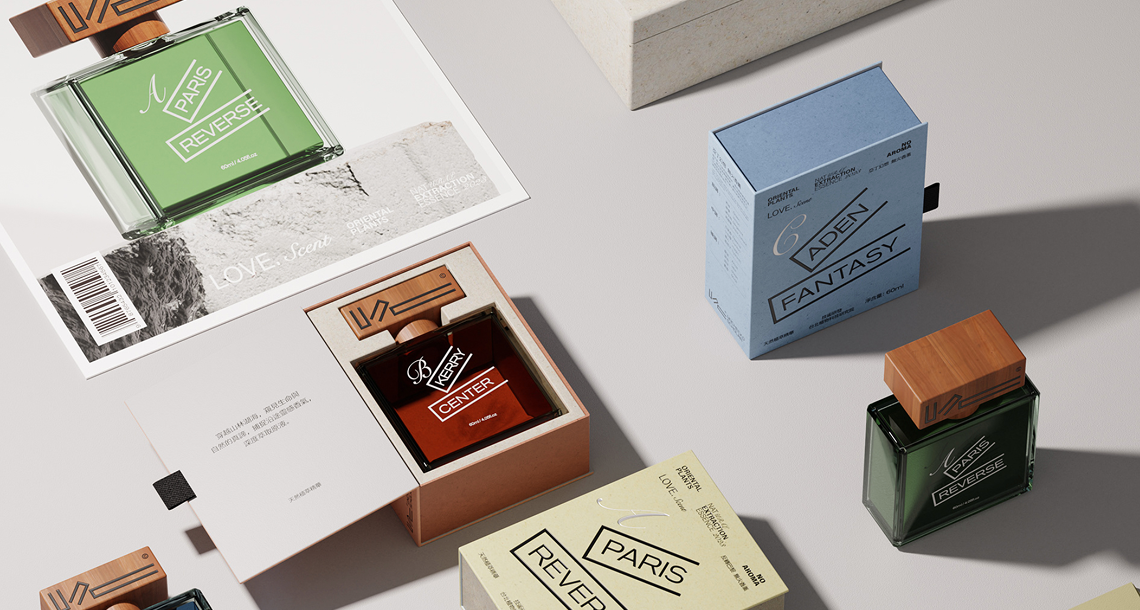

The choice between Zamak and acrylic for a perfume cap is one of the most consequential material decisions in fragrance packaging design. Get it right and the cap becomes a brand asset — an object that communicates exactly the right positioning through weight, finish, and tactile character. Get it wrong and the cap becomes a persistent source of consumer dissatisfaction, quality complaints, or margin pressure.
This buyer’s guide provides a structured, criteria-by-criteria comparison of Zamak and acrylic cap materials, designed to help brand owners, packaging engineers, and procurement managers make a decision that is grounded in commercial reality rather than assumption or habit.
The Fundamental Difference: What Each Material Communicates
Before examining individual criteria, it is worth stating the central positioning difference plainly. Zamak caps communicate heaviness, permanence, and metal — they carry the implicit associations of jewelry, watchmaking, and architectural hardware. Acrylic caps communicate lightness, clarity, and modernity — they carry the implicit associations of crystal, architectural glass, and contemporary design.
Neither is inherently superior. Both are correct for the right brand in the right context. The criteria below provide the framework for determining which context applies to your project.
Criterion 1: Brand Positioning and Target Market
Zamak
Zamak is the dominant cap material in prestige, luxury, and niche fragrance lines targeting adult consumers in Western Europe, the Middle East, and the premium tier of the Asian fragrance market. Its weight aligns with consumer expectations of quality in these segments — research consistently shows that heavier products are perceived as more premium, higher quality, and worth more money. For brands positioning at USD 80+ retail price points, Zamak is typically the expected baseline.
Acrylic
Acrylic is well-positioned for contemporary designer brands, commercial and masstige fragrance, and lines that incorporate architectural or color-forward cap design as a core brand element. It is also the preferred material for brands targeting younger demographics who respond more to visual differentiation and color than to tactile weight. At retail price points of USD 30–80, acrylic delivers competitive quality without the cost premium of Zamak.
Criterion 2: Weight and Tactile Experience
Zamak
At approximately 6.6 g/cm³, Zamak is among the densest materials used in fragrance packaging. A standard 50ml perfume bottle cap in Zamak weighs 25–60 grams depending on size and wall thickness. This weight is immediately perceptible when the cap is lifted — and for the consumer segments who associate weight with quality, it is an irreplaceable brand signal.
Acrylic
At approximately 1.19 g/cm³, acrylic caps weigh 4–12 grams for equivalent sizes — 4 to 8 times lighter than Zamak. For brands that have specifically designed their packaging for a lighter, more portable profile — particularly travel retail and airline fragrance formats — this is a feature. For brands competing on perceived luxury in a retail environment, it is a potential liability that must be compensated through other design elements.
Criterion 3: Surface Finish Capability
Zamak
Zamak offers the widest range of premium surface finishing options of any cap material. PVD coating (gold, gunmetal, black, rose gold), electroplating (chrome, nickel), UV lacquering, hot stamping, and laser engraving are all achievable on Zamak at commercial quality levels. The dense, dimensionally stable substrate produces crisp edge definition in relief details and logo embossing that acrylic cannot replicate.
Acrylic
Acrylic’s primary surface finishing advantage is its optical transparency — achievable in the material itself without any coating. Deeply colored, translucent, or frosted effects can be produced through pigment and additive selection in the molding compound, without secondary finishing. For brands that want a cap that appears to glow from within or that incorporates the fragrance bottle’s color story, acrylic is uniquely enabling. Acrylic also accepts UV metallization, hot stamping, and UV printing, though with somewhat less crispness than Zamak in fine detail reproduction.
Criterion 4: Design Complexity and Tooling
Zamak
Die-casting enables excellent geometric complexity — undercuts, fine surface textures, thin walls, and sharp feature definition are all achievable. However, very thin walls (below 1.5mm) and very deep undercuts present die-casting challenges that increase tooling complexity and cost. For caps with flowing organic forms or large planar surfaces, die-casting draft angle requirements must be incorporated into the design.
Acrylic
Injection molding of acrylic enables somewhat greater geometric freedom than die-casting, particularly for complex internal geometries and very thin features. Acrylic also allows for overmolding, insert-molding, and two-shot molding techniques that can incorporate multiple colors or materials in a single cap assembly. Tooling costs are generally lower than Zamak dies, and lead times are shorter.
Criterion 5: Unit Cost and MOQ
Zamak
Zamak caps carry higher unit costs than acrylic equivalents — typically USD 0.80–3.50 at 5,000–10,000 unit quantities, versus USD 0.40–1.80 for comparable acrylic caps. Die tooling investment (USD 1,500–5,000) is also higher. For volume fragrance lines or brands with tight margin constraints, this cost premium requires justification through brand positioning or market segment requirements.
Acrylic
Acrylic caps offer better economics for cost-sensitive projects. Lower tooling investment, faster cycle times, and lower raw material cost versus Zamak translate to lower per-unit cost at equivalent quantities. For private label or commercial fragrance programs where cost efficiency is a primary brief, acrylic with quality surface finishing delivers competitive perceived value at lower investment.
Criterion 6: Sustainability Considerations
Zamak
Zamak (zinc alloy) is infinitely recyclable with no material degradation — scrap material from die-casting operations is fully re-melted and reused. Post-consumer recycled Zamak is commercially available. Zinc itself is a naturally abundant element with established recycling infrastructure. RoHS-compliant Zamak grades are standard. For brands developing end-of-life take-back programs, Zamak’s recyclability is a genuine sustainability credential.
Acrylic
Standard PMMA acrylic is technically recyclable but faces practical barriers — collection infrastructure for post-consumer acrylic is limited in most markets, and recycled acrylic quality is typically insufficient for optical-grade applications. Bio-acrylic alternatives derived from plant-based feedstocks are commercially available but at significant cost premium. For brands with strong sustainability commitments, the recyclability advantage of Zamak over standard acrylic is meaningful.
Decision Framework Summary
- Choose Zamak when: luxury or prestige positioning; weight is a quality signal; PVD or metallic finish required; Middle Eastern or European premium market target
- Choose Acrylic when: contemporary or design-led brand; color or translucency is a core design element; cost efficiency is a primary constraint; younger demographic or travel retail target
- Consider both when: mixed-range product lines requiring material differentiation between tiers; architectural cap designs that require one material for structure and the other for aesthetic detail
Conclusion
The Zamak versus acrylic decision is ultimately a brand strategy question expressed through material specification. Both materials are capable of producing world-class fragrance caps when manufactured to appropriate quality standards. The right choice is the one that most accurately serves your brand positioning, your target consumer, your distribution channel, and your margin structure. Panda Glass manufactures both Zamak and acrylic caps to premium specifications and can provide side-by-side samples for any project to support an informed material decision.
Request a comparative sample set or a material specification consultation: info@pandaglass.com | www.pandaglass.com