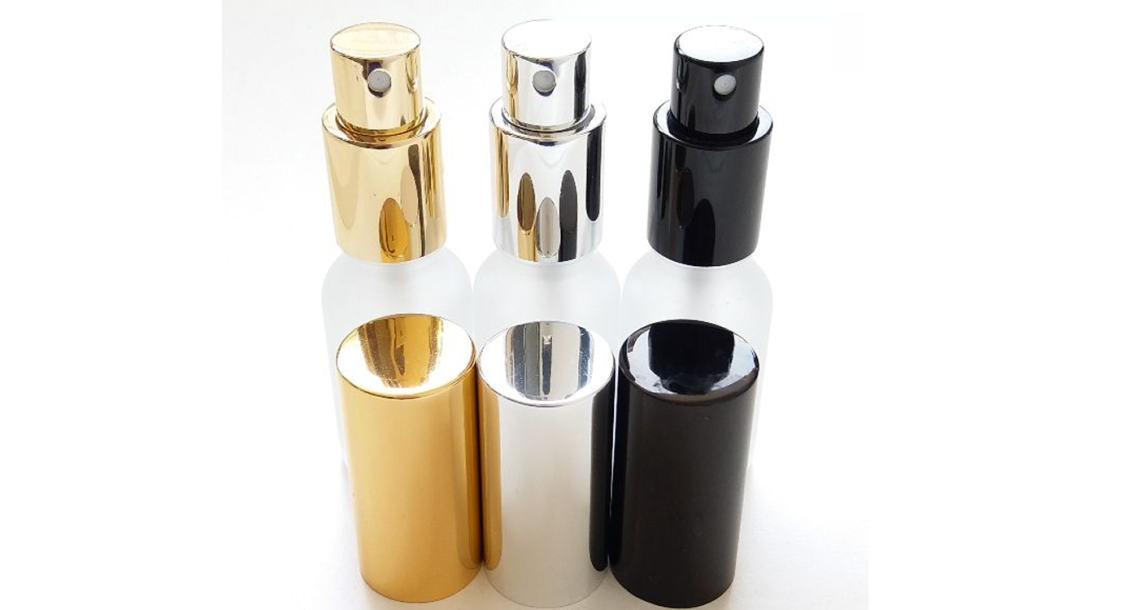
A Zamak cap with PVD gold finish represents one of the highest-value components in a fragrance packaging assembly. Its surface — polished to a mirror finish, coated with a titanium nitride layer thinner than a human hair, and lacquered to resist fingerprints — is also one of the most vulnerable to transit damage. A single scratch on a gold PVD cap surface is not a minor imperfection; it is a quality rejection, a replacement cost, and potentially a production delay.
For fragrance importers and brand owners receiving plated or coated cap shipments from Asian manufacturers, transit scratch damage is among the most frequently cited quality complaints. This article explains why plated surfaces are vulnerable, what packaging engineering solutions prevent damage, and what specification requirements to impose on cap suppliers as standard procurement conditions.
Why Plated and Coated Cap Surfaces Scratch Easily
The Physics of Thin Film Surfaces
PVD coatings, electroplated surfaces, and UV lacquer topcoats are all thin-film systems with hardness levels that — while superior to the underlying substrate — remain vulnerable to concentrated point contact loads. A PVD TiN coating at 0.5 microns thickness has surface hardness of 2,000–3,000 HV, but contact from a sharp metal edge or another cap’s rim can produce a scratch load that exceeds the coating’s fracture toughness locally, particularly if the scratch motion involves sliding abrasion.
Cap-to-Cap Contact During Vibration
In transit, packages experience continuous vibration at frequencies of 5–200 Hz. Without individual isolation of each cap, this vibration causes relative micro-motion between adjacent caps in bulk packaging — a relentless micro-abrasion process that progressively degrades surface finish across an entire lot. Even soft polybag packaging does not fully prevent this if the bag allows cap-to-cap metal contact through the film.
Static Load Compression
In stacked cartons, the weight of upper cartons creates sustained compressive loads on caps in lower positions. If caps are packaged with rim-to-surface contact (i.e., one cap’s rim resting on another cap’s finished top surface), the compressive load concentrates at the rim contact points, creating pressure marks and micro-indentation that are visible under normal lighting.
Packaging Engineering Solutions for Plated Caps
Individual Polyethylene Foam Sleeves
The minimum acceptable protection for any plated or PVD-coated cap is individual wrapping in polyethylene foam (EPE) sleeve or sheet. EPE foam at 2–3mm thickness provides sufficient cushioning to prevent cap-to-cap metal contact through normal vibration. Foam wrapping must completely enclose each cap including the top surface and rim — partial wrapping that leaves the most visible surfaces exposed is insufficient.
Foam sleeve color should be white or light grey; dark foam pigments can transfer to light-colored finishes under sustained contact pressure in warm transit conditions.
Individual Polybag with Internal Foam Insert
For high-value PVD finishes (gold, gunmetal, black), individual polybags incorporating a pre-formed foam insert that cradles the cap body while elevating the cap top surface away from bag contact represent a higher level of protection. This configuration prevents cap-to-cap contact, prevents rim-to-surface loading, and provides moisture isolation to prevent condensation-related finish spotting.
Thermoformed Cavity Trays
For order quantities where tray tooling cost is justified (typically 5,000+ units per order), custom thermoformed PET or PP trays with individual cap cavities provide the most effective scratch prevention packaging. Each cavity is dimensioned to the specific cap OD with a 0.5–1mm clearance fit — tight enough to prevent vibration-induced movement but loose enough for easy insertion and removal. Cavity depth positions the cap top surface below the tray rim, preventing any object from contacting the finished surface.
Tray-packed caps are stackable without direct cap contact, enabling efficient multi-layer carton packing without compression risk. Panda Glass uses custom thermoformed trays for all PVD-finished cap production as standard.
Tissue Interleaving for Trayed Caps
Even in tray packaging, the final layer of protection is acid-free tissue paper laid over the top surface of each cap before the tray lid is applied. Tissue prevents any condensation or particulate contamination from reaching the cap surface during the transit period. Acid-free tissue (pH 7.0–8.5) is specified to prevent discoloration reactions with metallic coatings over extended storage periods.
Cap-to-Cap Orientation Control
Where bulk packaging (without individual trays) is unavoidable for cost reasons, caps must be packed with consistent orientation — top-to-top or base-to-base — never top-to-base, which creates rim-to-surface contact. Orientation partitions or corrugated spacers between layers maintain this geometry throughout transit.
Outer Carton Specifications for Plated Cap Shipments
- Outer carton: Minimum B-flute double-wall corrugated, BCT (Box Compression Test) ≥ 800N
- Carton fill: Maximum 80% fill height to prevent carton-top pressure on top layer caps
- Handling labels: ‘FRAGILE — DO NOT CRUSH’ on all six faces; ‘THIS SIDE UP’ with orientation arrows on four vertical faces
- Desiccant: Silica gel sachets inside each carton for ocean freight shipments — prevents condensation spotting
- Carton sealing: Minimum 75mm wide packing tape — double-taped bottom seams for cartons >10kg gross weight
Pre-Shipment Inspection Protocol for Surface Finish
Before any plated cap shipment is released, surface finish inspection should be performed under standardized lighting conditions. The industry standard for fragrance cap finish inspection is evaluation under a 1,000-lux D65 illuminant at 45° incident angle, with the inspector positioned at 60cm viewing distance. Under these conditions, scratches, marks, and finish irregularities that would be visible to a consumer in natural retail lighting will be apparent.
Panda Glass performs 100% visual inspection of all plated caps before packaging, with AQL 0.65 Level II sampling inspection of packaged units before carton sealing.
What Buyers Should Specify in the Purchase Order
- Individual wrapping requirement: EPE foam sleeve minimum; thermoformed tray preferred for PVD finishes
- Orientation specification: Top-to-top orientation only for bulk-packed configurations
- Desiccant: Specify silica gel inclusion for ocean freight orders
- Lighting standard for finish inspection: D65 / 1,000 lux at 45°
- Scratch acceptance standard: Zero visible scratches under inspection standard at time of pre-shipment inspection
Conclusion
Transit scratch damage to plated caps is not an acceptable cost of global sourcing — it is a packaging engineering failure that is entirely preventable with the right specifications and supplier controls. The packaging solutions described in this article add marginal cost (typically USD 0.02–0.08 per unit for foam or tray packaging) relative to the value of the cap and the cost of replacements, production delays, and brand damage that scratched components create. Panda Glass treats scratch-free delivery as a non-negotiable commitment on all surface-finished cap production.
Request packaging specifications or pre-shipment inspection reports: info@pandaglass.com | www.pandaglass.com