Every fragrance brand eventually faces the same question: folding carton or rigid box? On the surface it seems like a simple cost decision. In practice, it is a brand strategy decision that affects everything from shelf presence and unboxing experience to logistics costs, storage efficiency, and sustainable packaging credentials.
This article provides a comprehensive side-by-side comparison of folding boxes and rigid boxes for perfume packaging, covering construction, material specifications, cost structures, and the brand positioning signals each format communicates to consumers.
What Is a Folding Box (Folding Carton)?
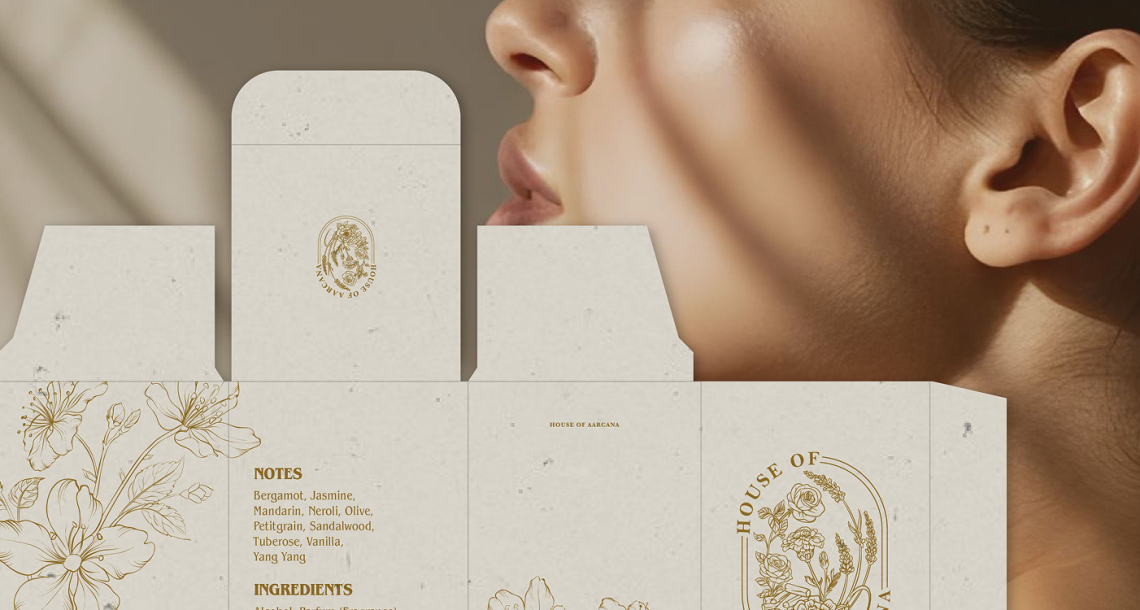
A folding box — also called a folding carton or tuck-end box — is manufactured from a single flat sheet of paperboard that is die-cut, scored, printed, and finished before being delivered flat to the brand or filling facility. The box is erected (folded into its three-dimensional form) at the point of filling or assembly, either manually or by automated cartoning equipment.
Folding cartons are the dominant format in commercial and masstige fragrance packaging globally. Their ability to be shipped and stored flat makes them highly efficient for brands managing large volumes across multiple distribution points.
Typical Construction
- Board weight: 300–450 gsm coated duplex or SBS (solid bleached sulfate) board
- Printing: Offset lithography (CMYK + spot colors) or digital printing for short runs
- Surface finish: Gloss or matte lamination, UV spot varnish, soft-touch lamination
- Structural options: Straight tuck end, reverse tuck end, auto-bottom, crash-lock base
- Minimum wall thickness achievable: 0.3–0.5mm depending on board grade
What Is a Rigid Box (Setup Box)?
A rigid box — also called a setup box, gift box, or presentation box — is constructed from a thick greyboard core (typically 1,500–2,500 gsm) wrapped with a decorative paper or fabric covering. Unlike folding cartons, rigid boxes are assembled at the factory and delivered in their finished three-dimensional form — they cannot be collapsed flat for shipping.
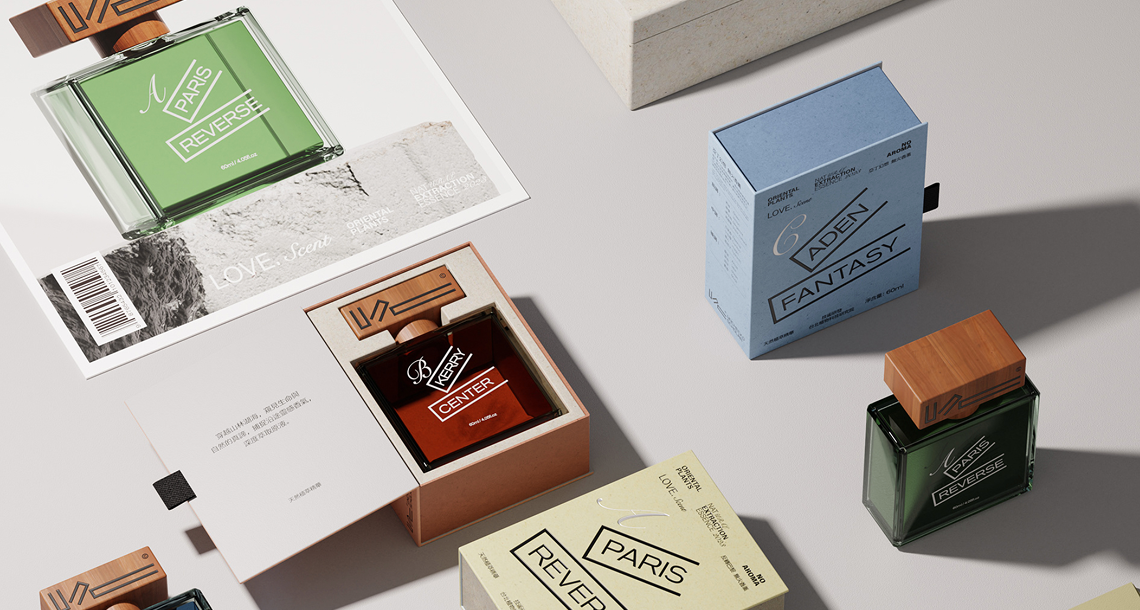
Rigid boxes are the format of choice for luxury, niche, and prestige fragrance lines where the unboxing experience is a core component of the brand proposition. The weight, rigidity, and tactile quality of a rigid box communicates premium positioning before the fragrance is ever experienced.
Typical Construction
- Core: 1,500–2,500 gsm grey board (chipboard) base structure
- Covering: Art paper (80–128 gsm), specialty paper, fabric, leather-effect material
- Interior: EVA foam insert, velvet tray, thermoformed plastic tray, or paperboard separator
- Closure: Lid and base (two-piece), magnetic closure, ribbon pull, or hinged lid
- Surface finish: Foil stamping, embossing, debossing, UV spot, silk-screen printing on wrap
Head-to-Head Comparison
Structural Integrity
Rigid boxes are significantly more robust than folding cartons — their thick greyboard core resists compression, denting, and corner damage that folding cartons are susceptible to under transit and retail handling stresses. For brands where the box is retained by the consumer as part of the product experience (storage, display), rigid construction is essential. Folding cartons are appropriate where the box is discarded after opening.
Unboxing Experience
The unboxing experience — increasingly important in an era where consumer-generated unboxing content drives brand visibility on social media — is fundamentally different between the two formats. A magnetic rigid box with velvet interior and a precisely fitted bottle seat creates a theater of opening that a folding carton cannot replicate. For fragrance brands investing in influencer marketing or direct-to-consumer channels where unboxing content is an asset, rigid box construction is a strategic investment.
Shipping and Storage Efficiency
Folding cartons ship and store flat — a pallet of 10,000 flat cartons occupies a fraction of the space of 10,000 assembled rigid boxes. For brands managing global distribution from centralized filling facilities, folding carton efficiency reduces warehousing costs significantly. Rigid boxes, delivered assembled, require substantially more storage space and higher freight costs per unit.
Cost Comparison
At equivalent order quantities, rigid boxes typically cost 3–6× more per unit than folding cartons of equivalent print quality. The cost premium reflects materials (thick greyboard plus cover paper), labor-intensive hand assembly, and lower production speed. For brands at USD 30–60 retail price points, folding carton economics are typically the appropriate choice. For brands at USD 80+ retail, rigid box cost is justified by brand positioning requirements.
Sustainability Profile
Both formats can be produced with FSC-certified materials and water-based inks. Folding cartons have an advantage in recyclability — single-material paperboard is widely accepted in municipal recycling streams. Rigid boxes with multiple material components (greyboard + paper wrap + fabric + foam insert) are more complex to recycle and may be classified as non-recyclable in some markets. Brands with sustainability commitments should specify FSC certification and mono-material construction where possible.
Decision Framework
- Retail price point USD 30–60, high volume, efficient logistics priority: Folding carton
- Retail price point USD 80+, prestige/luxury positioning, unboxing experience critical: Rigid box
- Gift sets, limited editions, direct-to-consumer subscription: Rigid box
- Travel retail, duty-free, airline channels: Folding carton (space efficiency)
- Niche fragrance, brand story packaging, retail collector appeal: Rigid box
- Private label, white-label, volume commercial fragrance: Folding carton
Conclusion
The choice between folding and rigid box is ultimately a decision about what role the packaging plays in the brand experience. Both formats, executed to premium specifications, can represent a fragrance brand with excellence. The right answer depends on price point, volume, distribution channel, and the extent to which the packaging itself is part of the product. Panda Glass manufactures both folding cartons and rigid boxes and offers single-source procurement for brands requiring complete packaging consistency across bottle, cap, pump, and box.
Request box samples or a structural specification consultation: info@pandaglass.com | www.pandaglass.com