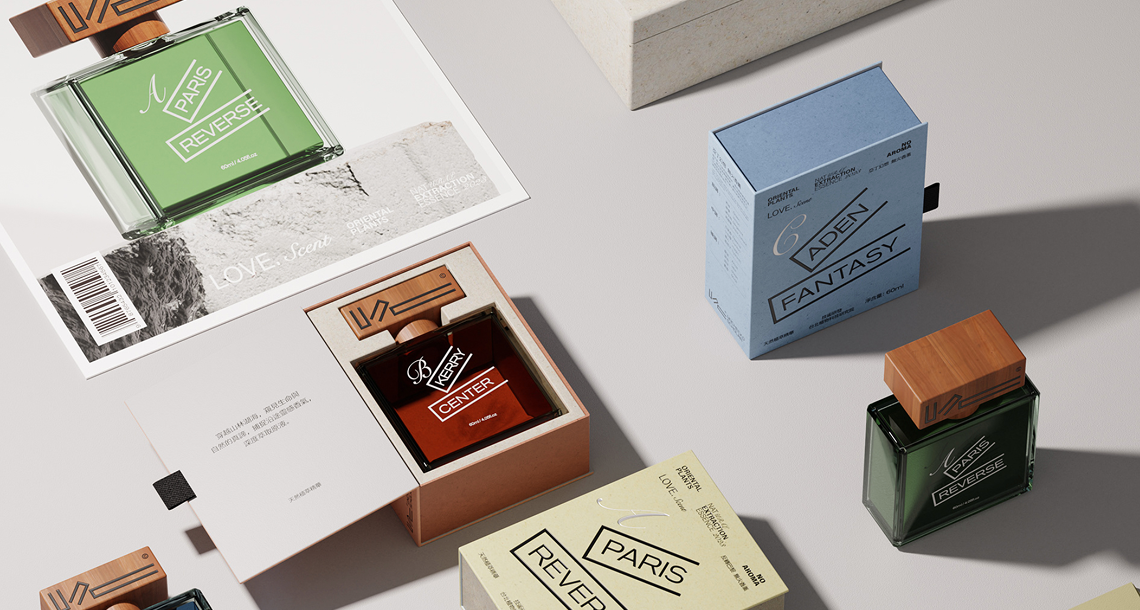
A fragrance bottle is never just a container. It is the first chapter of a scent story — the object a customer holds before they ever smell what’s inside.
Introduction: The Vessel as Brand Statement
In the fragrance industry, the bottle arrives before the scent does. A customer sees the vessel on a shelf, picks it up, turns it over in their hands, and forms an opinion — before the cap is ever lifted. That moment of first contact is not incidental. It is the result of deliberate choices in material, geometry, and closure, each one encoding a message about the brand behind the fragrance.
This guide is for brand owners, product developers, and packaging buyers who understand that selecting a fragrance vessel is not a procurement exercise — it is a creative and strategic decision with long-term implications for brand equity, product integrity, and consumer experience.
Part One: Materials — The Foundation of Every Decision
The glass you choose sets the ceiling for every aesthetic and functional quality that follows. Three primary material families dominate the fragrance packaging market, each with a distinct performance and cost profile.
Soda-Lime Glass
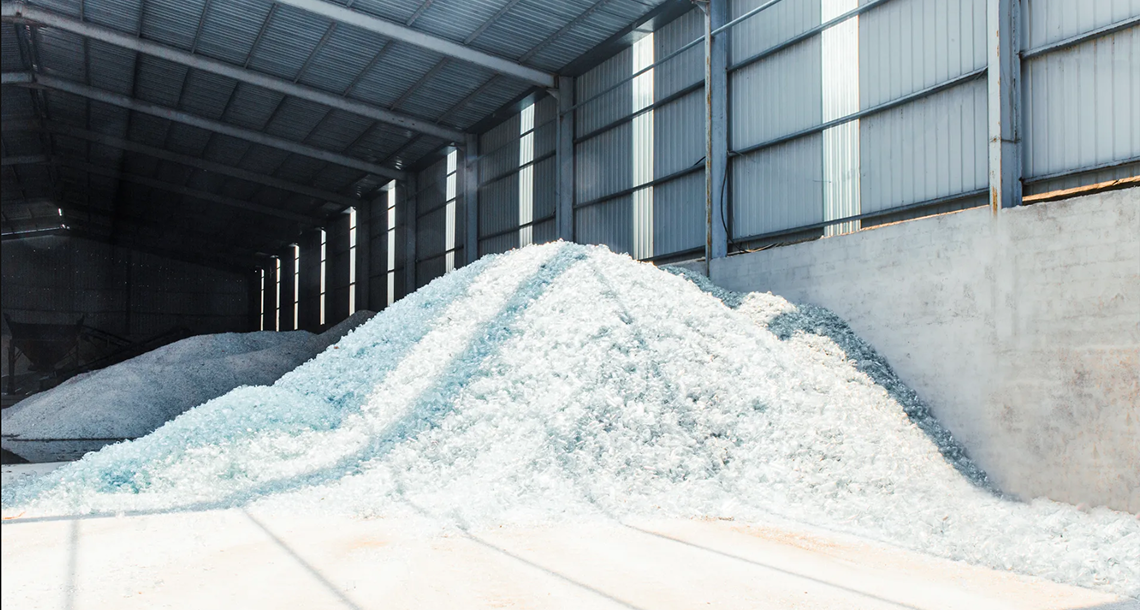
Soda-lime glass is the industry’s workhouse — produced at scale, widely available, and competitively priced. Its composition (roughly 70% silica, 15% soda, and 9% lime) makes it well-suited for standard fragrance applications where the primary concern is visual appeal rather than chemical resistance.
For most alcohol-based Eau de Parfum and Eau de Toilette formulations, soda-lime glass performs reliably. Its surface accepts coatings, inks, and metallic finishes with consistent adhesion, making it a practical canvas for surface decoration. Its main limitation is a modest susceptibility to thermal shock and a slightly lower refractive index compared to higher-grade alternatives — meaning it captures and reflects light with less intensity.
Best suited for: Mid-range and entry-level fragrances, high-volume production runs, brands prioritizing unit-cost efficiency without sacrificing visual quality.
Borosilicate Glass
Borosilicate glass introduces a significant performance upgrade through its boron trioxide content, which fundamentally changes the material’s behavior under chemical and thermal stress. It is substantially more resistant to reactive fragrance compounds — particularly those with high concentrations of aldehydes, musks, or botanical extracts that can, over time, interact with standard glass formulations.
Its dimensional stability also makes it preferable in applications where precision of form is critical: thinner walls, sharper edges, and tighter tolerances are all more reliably achieved in borosilicate. The tradeoff is cost — borosilicate production is more energy-intensive, and the material itself commands a premium over soda-lime.
Best suited for: Niche and artisan fragrance houses, complex botanical or natural fragrance concentrates, any application where formula-packaging compatibility is a primary concern.
Crystal Glass
Crystal glass — distinguished by its lead-free or traditional lead oxide content (the latter now largely phased out of cosmetic packaging for regulatory compliance) — exists in a category defined by pure luxury. Its extraordinarily high refractive index produces a depth and brilliance that no other glass material can replicate. Light enters a crystal bottle and scatters into prismatic complexity. The weight is substantial. The sound when set on a surface is unmistakably different.
Crystal is not chosen for functional reasons. It is chosen because it communicates a singular message: that no compromise was made anywhere in the product’s creation. It is the material of collector editions, heritage houses, and anchor SKUs where the object itself is part of the value proposition.
Best suited for: Prestige and luxury tiers, limited editions and collector releases, any fragrance where the unboxing and shelf presence must be extraordinary.
Part Two: Specifications — The Technical Decisions That Matter
Aesthetic intent must translate into precise specifications. Two parameters define most of the fragrance vessel’s functional performance: capacity and closure type.
Capacity: Matching Volume to Strategy
Fragrance vessels are produced across a wide range — from 5 ml miniatures to 200 ml prestige formats — and each capacity serves a distinct commercial function.
| Capacity | Primary Application |
|---|---|
| 5–10 ml | Travel miniatures, discovery sets, gift-with-purchase |
| 15–30 ml | Entry-level retail, subscription and sampling programs |
| 50 ml | Core retail SKU, the industry’s most common single unit |
| 75–100 ml | Premium retail, gifting formats |
| 125–200 ml | Value formats, prestige anchors, collector editions |
The choice of capacity is rarely a standalone decision. It intersects with formula concentration (an Extrait de Parfum at 5 ml is a different proposition from an Eau Fraîche at 200 ml), retail price architecture, and the physical presence a brand wants to command on shelf. A 30 ml bottle can look either modest or jewel-like depending on the proportion of its form — which is why capacity specification must always be considered alongside the bottle’s overall dimensions and wall thickness, not just its volume.
Closure Type: Crimped vs. Screw — A Functional and Aesthetic Choice
The closure system is one of the most consequential and frequently underestimated decisions in fragrance packaging. It affects product integrity, consumer experience, and long-term fragrance quality.
Crimped (ferrule) closures involve a metal collar mechanically compressed around the bottle neck, creating a permanent, hermetic seal. This is the standard for fine fragrance: it produces a near-perfect barrier against evaporation and oxidation, preserving top notes with exceptional fidelity over time. The crimp also enables the pump spray mechanism that defines the modern fragrance application experience. From a luxury standpoint, the crimped closure conveys permanence and precision — it signals that the bottle is not meant to be refilled casually, but to be experienced completely.
Screw closures offer a different value proposition: reusability and refillability. They are gaining significant traction as sustainability-driven brands build refill programs into their commercial model. A well-engineered screw closure with a high-quality gasket maintains excellent seal integrity, but it requires more rigorous quality control at the cap-to-bottle interface — any tolerance mismatch between the neck thread and cap thread creates micro-gaps that allow fragrance molecules to escape over time.
The evaporation differential between a well-sealed crimp and a poorly specified screw closure can be significant — in some testing conditions, a substandard screw system shows measurable volatile loss within weeks of storage. For brands building refill programs, the engineering investment in precise thread tolerances and compatible gasket materials is not optional.
Part Three: Visual Aesthetics — Form as Brand Language
Glass geometry is not decorative. It is communicative. The silhouette of a fragrance bottle carries meaning before a single word of copy is read.
Square and Rectangular Forms
Square and rectangular vessels are the vocabulary of modernity and restraint. Their orthogonal geometry suggests precision, control, and contemporary minimalism. They photograph well in flat-lay compositions. They stack and ship efficiently. They read as architectural objects rather than decorative ones.
Brands that choose square forms are typically signaling clarity of concept — a fragrance that knows exactly what it is, uncomplicated by nostalgia or ornamentation. Square bottles are also highly adaptable to surface decoration: their flat faces provide generous, print-friendly surfaces for screen printing, hot stamping, and applied labels.
Round and Oval Forms
Circular and oval profiles carry an entirely different resonance. They are softer, more tactile, more approachable. Their curvature suggests tradition, femininity (in the broadest cultural sense), and the sensory pleasure of holding something comfortable in the hand.
Round bottles reference the long history of perfumery — flacon shapes that trace back through decades of fragrance design. For a brand building on heritage, natural ingredients, or an emotional narrative, a round form is not a safe default; it is a conscious alignment with that tradition.
Asymmetric and Custom Forms
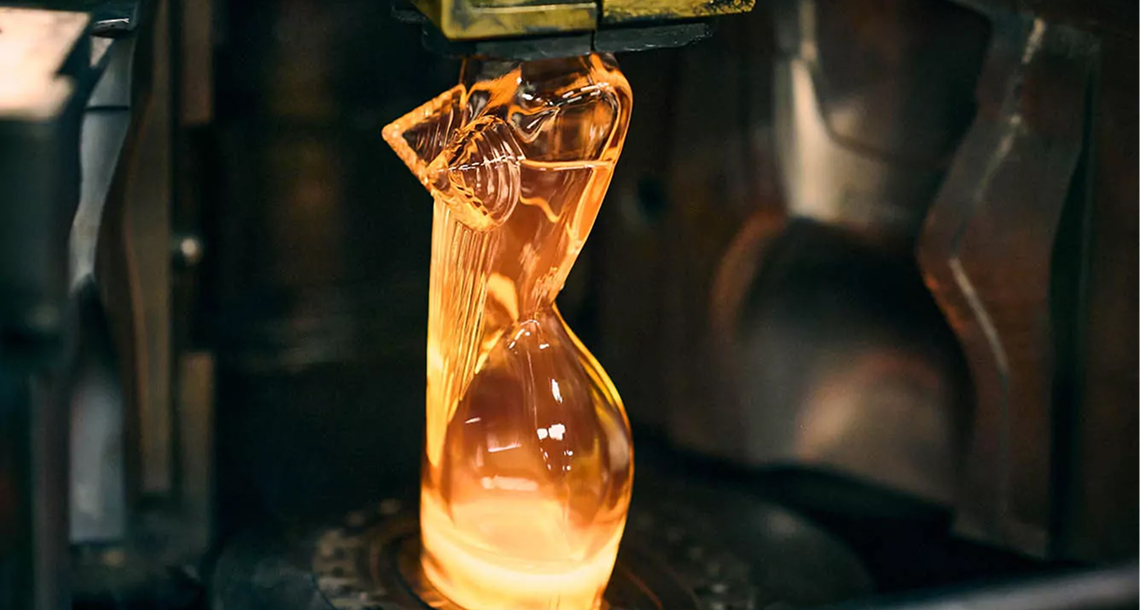
Custom silhouettes — whether faceted, sculpted, or conceptually driven — are the most powerful and most expensive tool in fragrance packaging. A distinctive bottle form can become a brand’s most recognizable asset, more immediately identifiable than a name or logo.
The case for custom form investment is strongest when a brand has a singular concept at its core that no existing mold can express. A fragrance inspired by a specific landscape, material, or cultural reference may find that a bespoke vessel is the only honest way to bring that concept into physical form. The development cost — which includes custom mold creation and extended sampling timelines — is an investment in brand differentiation that can pay compounding returns as the silhouette becomes associated with the brand in the market.
Conclusion: Integration, Not Selection
Choosing a fragrance vessel is not a matter of browsing options and selecting the most attractive one. It is an act of integration — aligning material capability, technical specification, visual language, and brand intention into a single coherent object.
The bottle that succeeds is the one where nothing feels arbitrary: where the weight of the glass is consistent with the price of the fragrance, where the closure system is engineered for how the consumer will actually use and store the product, where the geometry speaks the same aesthetic language as the name, the cap, the outer carton, and the story the brand is trying to tell.
That level of coherence doesn’t happen by accident. It happens through deliberate decision-making at every specification point — and through a manufacturing and finishing partner who understands that precision at each stage is what separates packaging that is merely functional from packaging that is genuinely memorable.
Next in this series: Precision Glass Manufacturing — how automated production lines and transparent sampling processes ensure that the vessel you design is the vessel that arrives, at scale, every time.