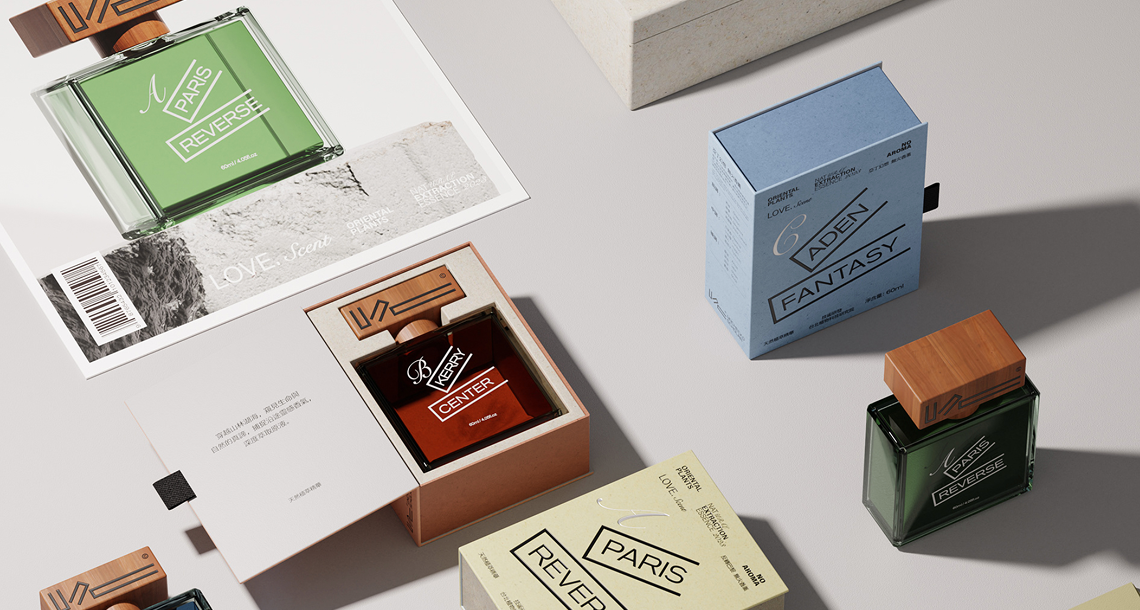
The cap is the first thing a consumer sees and touches when they pick up a fragrance. Before the bottle is lifted, before the fragrance is smelled, the cap communicates everything about the brand’s positioning — its weight, texture, temperature, and finish. For fragrance packaging buyers, selecting the right cap material is therefore not a cosmetic decision; it is a brand strategy decision with direct implications for manufacturing cost, lead time, minimum order quantity, and long-term quality performance.
This article provides a comprehensive overview of the four primary materials used in perfume cap manufacturing — Zamak, acrylic, wood, and ABS — covering the properties, manufacturing processes, aesthetic capabilities, and commercial trade-offs of each.
1. Zamak — The Premium Metal Standard
What Is Zamak?
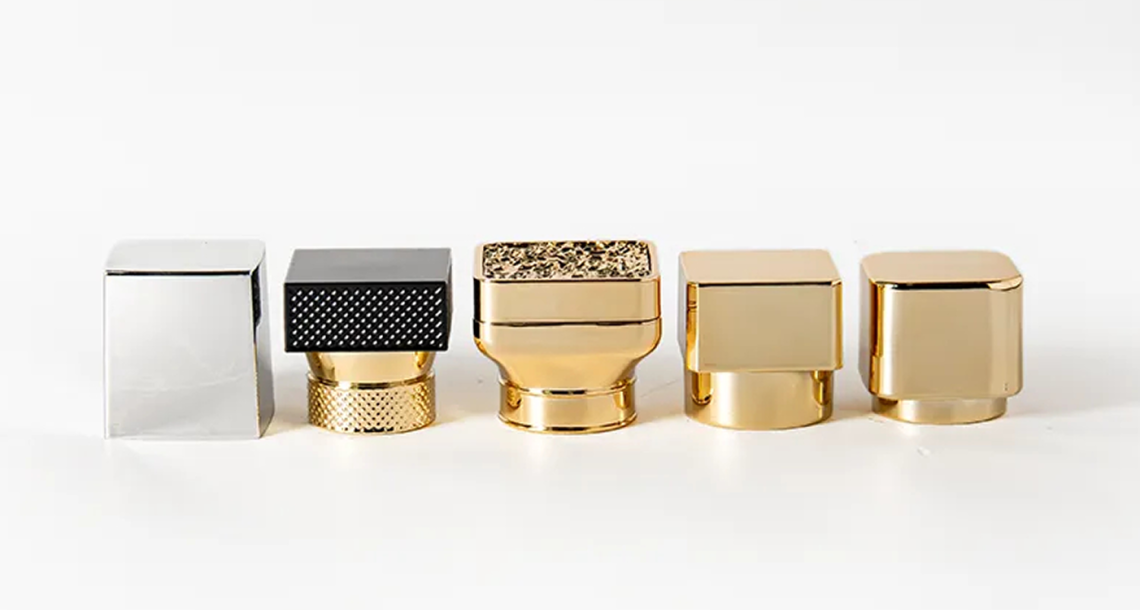
Zamak is a family of zinc-based alloys (the name derives from the German words for its constituent metals: Zink, Aluminium, Magnesium, and Kupfer/copper). The most widely used grade in fragrance packaging is Zamak 3, which contains approximately 96% zinc with aluminum, magnesium, and copper additions. Its combination of high density, excellent castability, and surface finish receptivity makes it the material of choice for luxury and prestige fragrance caps globally.
Key Properties
- Density: ~6.6 g/cm³ — delivers the satisfying weight that consumers associate with premium quality
- Excellent die-casting precision: Capable of complex geometries, fine surface relief, and logo embossing with sharp detail
- Ideal substrate for PVD coating, electroplating, and UV lacquering
- Recyclable and RoHS-compliant grades available for sustainability-focused brands
Typical Applications
Zamak caps are the dominant choice for niche, prestige, and luxury fragrance lines — particularly those targeting the European and Middle Eastern markets where cap weight is an important tactile quality signal. They are commonly specified for 50ml–100ml bottles where the cap-to-bottle weight ratio contributes meaningfully to the overall held experience.
Commercial Considerations
Zamak caps require steel die tooling, which involves a tooling investment of USD 1,500–5,000 per design depending on complexity. Unit costs at standard quantities (5,000–10,000 units) typically range from USD 0.80–3.50, depending on size, finish, and logo treatment. Minimum order quantities are typically 3,000–5,000 units for standard designs.
2. Acrylic — Clarity, Color, and Design Freedom
What Is Acrylic in Cap Manufacturing?
Acrylic (polymethyl methacrylate, PMMA) is a transparent thermoplastic that can be injection-molded into complex cap geometries with exceptional optical clarity and surface gloss. In fragrance packaging, acrylic caps are valued for their glass-like appearance, the ability to incorporate colors and translucency effects, and their compatibility with a wide range of surface finishing processes.
Key Properties
- Optical clarity: Refractive index close to glass — enables crystal-clear or deeply colored transparent effects
- Excellent surface gloss: Naturally high gloss without secondary coating, reducible to matte with texturing or coating
- Lighter weight than Zamak: ~1.19 g/cm³ — preferred for travel retail and airline fragrance lines
- Compatible with UV printing, hot stamping, and metallic insert-molding
Typical Applications
Acrylic caps are widely used in commercial and masstige fragrance lines, as well as designer brands that incorporate colored or architectural cap designs. The ability to mold translucent colors — deep burgundy, smoky grey, champagne — enables visual differentiation that is difficult to achieve in metal. Acrylic is also frequently used for oversized architectural caps where Zamak’s weight would make the assembly impractical.
Commercial Considerations
Injection mold tooling for acrylic caps is typically USD 800–2,500 per design. Unit costs at 5,000–10,000 units range from USD 0.40–1.80. Lead times are generally shorter than Zamak due to faster injection molding cycles versus die casting.
3. Wood — Natural Luxury and Sustainability Positioning
Why Wood in Fragrance Packaging?
Wooden caps occupy a distinct niche in the fragrance packaging market — they communicate natural origin, artisan craft, and sustainability in a way that no synthetic material can replicate. The warmth, grain variation, and organic texture of wood create a sensory experience that is uniquely human and increasingly valued by consumers who align with eco-conscious or heritage brand positioning.
Key Properties
- Natural grain variation: Every cap is subtly unique — a feature, not a defect, for the right brand
- Warmth to the touch: Wood’s low thermal conductivity gives a warm hand feel versus the cold touch of metal
- Sustainable sourcing available: FSC-certified wood species for brands with verified sustainability commitments
- Compatible with laser engraving, natural oil finishing, and lacquering
Common Wood Species Used
Rosewood, walnut, cherry, beech, and bamboo are the most frequently used species in fragrance cap manufacturing. Species selection affects color, grain character, hardness, and sustainability certification availability. Bamboo is the fastest-growing and most readily FSC-certified option.
Commercial Considerations
Wood caps involve more complex production processes — raw material selection, turning or CNC machining, sanding, finishing — than die-cast or injection-molded alternatives. Unit costs are typically USD 0.60–2.50 depending on species, size, and finish. Natural material variation requires tighter incoming quality inspection and higher rejection rates than synthetic materials.
4. ABS — Cost-Efficient Versatility
What Is ABS?
Acrylonitrile Butadiene Styrene (ABS) is the most widely used engineering thermoplastic in fragrance cap manufacturing for the commercial and mass-market segment. Its combination of rigidity, impact resistance, good surface finish, and low cost makes it the default material choice for volume fragrance lines where cost efficiency is a primary constraint.
Key Properties
- Low material cost: Lowest raw material cost of the four materials covered in this article
- Good impact resistance: More resistant to cracking than acrylic or PMMA
- Wide finish compatibility: Accepts electroplating, UV coating, spray lacquer, and metallization
- High production speed: Fast injection molding cycle times support high-volume production
Typical Applications
ABS caps are standard in mass-market fragrance, private label, and promotional fragrance lines. They are also commonly used as the substrate for electroplated or metallized caps, where the ABS body is coated to simulate the appearance of metal at a fraction of the cost.
Commercial Considerations
ABS tooling is the lowest-cost option at USD 500–1,500 per design. Unit costs at 10,000+ units can be as low as USD 0.15–0.60. The primary trade-off is perceived quality — unfinished ABS has a plastic appearance and lighter weight that communicates a lower price point. Surface finishing investment is therefore essential for ABS caps targeting any above-mass-market positioning.
Material Selection Summary
- Luxury / Prestige / Middle East market: Zamak — weight, surface quality, and PVD finish capability are non-negotiable
- Design-led / Architectural / Color-forward: Acrylic — optical effects and translucency impossible in metal
- Natural / Eco / Artisan / Niche: Wood — sensory differentiation and sustainability narrative
- Volume / Commercial / Private Label: ABS — cost efficiency with finish upgrade potential
Conclusion
Cap material selection is one of the highest-leverage decisions in fragrance packaging design. The right material communicates brand values before a single drop of fragrance is experienced. Panda Glass manufactures all four cap material types in-house, offering single-source procurement for brands that require consistent quality across glass bottle, cap, pump, and packaging components.
Request material samples or a technical specification consultation: info@pandaglass.com | www.pandaglass.com