
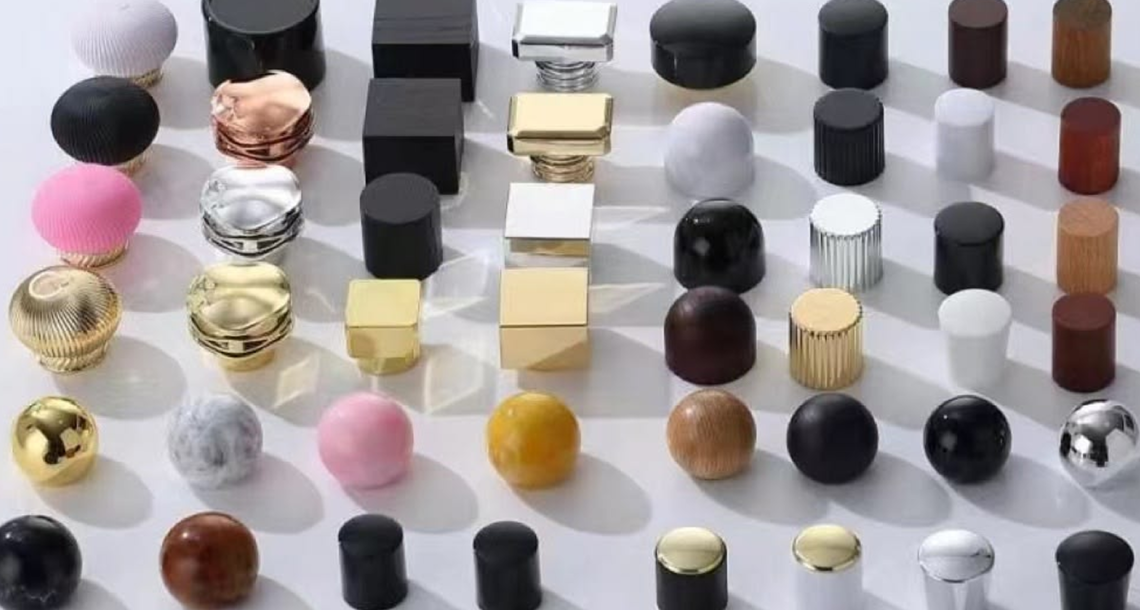
A perfume cap that falls off during retail display is a brand embarrassment. A cap that requires excessive force to remove creates a frustrating consumer experience. Between these two failure modes lies a precise engineering target — the correct snap-fit or friction-fit retention force — and the quality control infrastructure to achieve it consistently across every unit in a production run.
For fragrance buyers and quality managers, cap retention force testing is one of the most important yet most frequently under-specified quality parameters in cap procurement. This article explains the engineering principles behind cap retention force, the testing protocols used to measure it, and the specification ranges that define acceptable performance for different cap types and market segments.
Why Cap Retention Force Matters
Consumer Experience
The act of removing and replacing a perfume cap is a ritual that occurs thousands of times over the product’s lifespan. The force required to remove the cap, the tactile feedback of the snap engagement, and the auditory click of the cap seating — all of these contribute to the perceived quality of the fragrance experience. A cap with correct retention force removes with a satisfying, controlled action and replaces with a definitive snap that signals secure closure. These are not trivial details; they are the sensory touchpoints that reinforce luxury positioning at every use occasion.
Functional Integrity
Beyond experience, retention force serves practical protective functions. A correctly fitted cap protects the pump actuator from accidental depression during transit and display. It prevents contamination of the pump orifice. For friction-fit caps, it maintains a partial vapor seal that slows fragrance evaporation from the open pump nozzle. In retail environments, caps that self-disengage from vibration or air movement create costly display losses.
Types of Cap Engagement Mechanisms
Snap-Fit (Mechanical Lock)
Snap-fit caps incorporate a geometric interference feature — typically a bead, lip, or ledge on the cap bore that engages a corresponding feature on the pump collar or bottle neck. Engagement requires deformation of either the cap or the mating component to pass the interference zone, after which the geometry springs back to create a positive mechanical lock. Removal requires sufficient force to overcome this interference again.
Snap-fit designs offer positive engagement feedback and more predictable retention force consistency, but require tighter dimensional tolerances on both cap bore and mating feature to perform correctly. They are the preferred mechanism for luxury and prestige cap applications.
Friction-Fit (Interference Fit)
Friction-fit caps rely on a controlled dimensional interference between cap bore ID and pump collar OD to generate retention force through surface friction alone, with no geometric lock feature. Retention force is generated entirely by the elastic deformation of the cap bore material. Friction-fit designs are simpler to manufacture and more forgiving of minor dimensional variation, but more sensitive to temperature and humidity changes (particularly relevant for acrylic and ABS caps in humid or cold environments).
The Retention Force Testing Protocol
Equipment
Retention force measurement requires a tensile testing machine or dedicated force gauge with a suitable fixture that grips the pump collar or bottle neck while applying a controlled axial pull force to the cap. Crosshead speed (pull rate) must be standardized — ASTM F2369 recommends 300mm/min for closure removal testing. Results are expressed in Newtons (N).
Test Procedure
- Step 1: Condition samples at 23°C ± 2°C and 50% ± 5% RH for minimum 24 hours before testing
- Step 2: Apply cap to the test bottle or collar assembly at the production-specified engagement depth
- Step 3: Mount assembly in tensile tester fixture — cap fixed, collar/bottle pulled axially
- Step 4: Apply axial pull at 300mm/min until cap disengages
- Step 5: Record peak force (N) at disengagement point
- Step 6: Repeat minimum 10 specimens per lot; calculate mean, standard deviation, and Cpk
Temperature Conditioning Variants
For products destined for climatic extremes — Middle Eastern summer retail environments (40°C+) or cold-climate storage (-10°C) — retention force testing at elevated and depressed temperatures is recommended. Zamak caps are relatively insensitive to temperature-driven dimensional change; acrylic and ABS caps can show significant retention force variation with temperature due to differential thermal expansion between cap material and pump collar material.
Retention Force Specification Ranges
- Luxury / prestige fragrance (snap-fit Zamak cap): 8–20 N removal force — firm engagement with definitive snap
- Prestige / masstige (friction-fit acrylic or ABS): 5–12 N — controlled removal without perceived looseness
- Travel / airline retail (any material): 15–25 N — elevated retention to prevent accidental disengagement
- Refillable / high-frequency removal (screw or friction-fit): 3–8 N — ease of removal prioritized
What Happens When Retention Force Is Out of Specification
Insufficient Retention Force (< Minimum Specification)
Under-retention causes caps to self-disengage from vibration on retail shelves, during shipping, or from minor contact. Fragrance is exposed to air, accelerating top-note evaporation. In transparent packaging or display cases, a displaced cap creates an immediate impression of a damaged or used product. Root causes include cap bore ID oversize, pump collar OD undersize, or inadequate snap geometry depth.
Excessive Retention Force (> Maximum Specification)
Over-retention creates a frustrating consumer experience — caps that require two-handed removal, that cause bottle tipping, or that visibly distort during removal. In extreme cases, excessive retention force can cause snap geometry fracture on first removal, particularly in brittle materials like acrylic or zinc die castings with thin cross-sections. Root causes include cap bore ID undersize, pump collar OD oversize, or snap geometry depth exceeding material deflection limits.
Incoming Inspection for Buyers
Fragrance buyers receiving cap production should incorporate retention force testing into incoming quality inspection protocols alongside dimensional checks and surface finish inspection. Recommended AQL level for retention force sampling is AQL 1.0 (normal inspection, Level II) per ANSI/ASQ Z1.4. Any lot where the mean retention force falls outside the specified range should be quarantined pending supplier investigation.
Conclusion
Cap retention force is a quantifiable, testable specification that defines a core dimension of product quality and consumer experience. Treating it as a secondary concern — as many buyers do — creates unnecessary warranty exposure and brand risk. Panda Glass applies retention force testing to 100% of cap production on new tooling qualification and to AQL samples on all ongoing production runs, with test data available in pre-shipment quality reports.
Request retention force specification sheets or QC protocols: info@pandaglass.com | www.pandaglass.com