A fragrance bottle that survives manufacturing, passes quality inspection, and clears customs is not yet safe. The last mile of risk — the one that ends in a consumer’s hands — is the distribution journey, and it is where inadequate protective packaging extracts its most visible cost.
Introduction: The Distribution Journey as a Stress Test
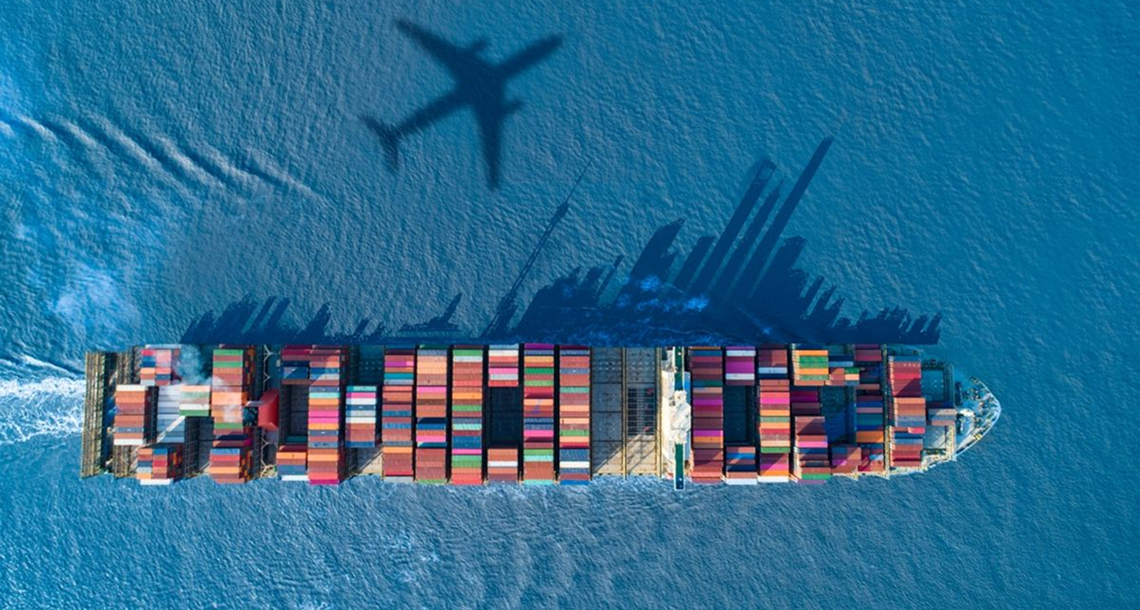
Fragrance glassware is among the most demanding categories in consumer goods logistics. The product is fragile by nature — glass under mechanical shock fails without warning. The contents are high-value and, in many formulations, classified as hazardous materials for transport purposes. The packaging must perform across supply chain segments that vary enormously in their handling conditions: automated fulfillment centers, ocean container vessels crossing weather systems, air freight holds subject to pressure and temperature variation, and last-mile courier networks where parcels are sorted at speed.
A single packaging specification must account for all of these environments simultaneously. This is not a problem that can be solved by choosing sturdy outer cartons. It requires a systematic approach that begins with how the individual bottle is protected and extends through every layer of the distribution stack to the documentation that allows it to cross borders without delay.
This article examines the protective packaging engineering, transport mode considerations, and export documentation infrastructure that together determine whether precision fragrance packaging arrives at its destination in the condition it left the factory.
Part One: Inner Protective Packaging — The First Line of Defense
The most important protective decision in fragrance logistics is made at the innermost layer: how each individual bottle is cushioned against the mechanical energy of transit. No outer packaging, however robust, can compensate for inadequate inner protection.
EPE Foam: The Standard for Individual Bottle Protection
Expanded polyethylene (EPE) foam — commonly referred to as pearl cotton in the fragrance packaging industry — is the primary material for individual bottle protection across virtually all commercial fragrance distribution. Its combination of properties makes it uniquely suited to the application: low density (and therefore low added weight), consistent cushioning across a wide range of impact velocities, resistance to moisture and chemical interaction with fragrance solvents, and the ability to be cut and formed to precise dimensional tolerances.
The critical design parameter for EPE inner packaging is the degree of surface contact between the foam and the bottle. A well-engineered EPE insert achieves full or near-full contact with the bottle’s external geometry — distributing any impact energy across the maximum possible surface area rather than concentrating it at isolated contact points. A foam insert that fits loosely, or that contacts the bottle only at its base and shoulder, creates conditions where the bottle can move within the package and strike the foam walls at the specific impact velocities most likely to cause fracture.
Custom-profile EPE inserts — die-cut to the exact external dimensions of each bottle design — are the correct specification for any fragrance packaging destined for long-haul distribution. Standard foam blocks with recessed cavities are adequate for some applications but introduce dimensional variability that accumulates into protection inconsistency across a production run of inserts.
Shock Absorption Engineering: Understanding the Drop Test
The industry-standard validation method for inner protective packaging is drop testing — physically dropping packaged units from defined heights onto defined surfaces and evaluating the result. ISTA (International Safe Transit Association) test protocols and ASTM D4169 define standardized drop sequences that simulate the range of orientations and heights a parcel encounters in normal distribution handling.
For fragrance glass packaging, drop test validation should be conducted at the maximum drop height relevant to the intended distribution channel. E-commerce fulfillment environments — where parcels may be dropped from conveyor heights or sorting equipment — impose higher peak impact loads than palletized retail distribution. A packaging specification validated only for retail pallet distribution may fail systematically in a direct-to-consumer fulfillment context.
The practical implication for brands building omnichannel distribution is that a single protective packaging specification may not be optimal for all channels simultaneously. Brands shipping the same SKU through both retail and e-commerce channels should validate their inner protective packaging against the more demanding of the two environments — typically e-commerce — and accept the modest cost premium that this entails.
Anti-Vibration Considerations for Long-Haul Freight
Drop impact is the most commonly tested failure mode, but it is not the only one. Long-haul ocean freight exposes palletized shipments to sustained vibration — low-amplitude, high-cycle mechanical energy that is qualitatively different from a single impact event and that produces a distinct failure pattern: abrasion damage to bottle surfaces, loosening of crimped assemblies, and fatigue failures in decorative elements that are adhesively bonded to glass.
EPE foam provides reasonable vibration damping, but its effectiveness depends on the foam density being matched to the mass of the object it is protecting. A foam density specification appropriate for a 50ml bottle may be inadequate for a 200ml bottle of the same design. Foam density selection should be validated against vibration test data — not assumed from visual assessment of the foam’s apparent firmness.
For high-value fragrance shipments in ocean freight, additional anti-vibration measures — including intermediate corrugated dividers within master cartons and pallet-level vibration damping pads — provide incremental protection that is justified by the value of the cargo they protect.
Part Two: Outer Packaging Architecture — From Unit to Pallet
Individual bottle protection operates within a larger packaging system. The outer carton, the master shipper, and the palletization architecture each contribute to — or detract from — the overall protective performance of the distribution unit.
Retail Inner Carton
For fragrances sold in retail packaging, the branded inner carton (the box the consumer receives the bottle in) is both a presentation element and a structural component of the protective system. Carton board specification — grammage, flute type for any corrugated elements, and printing substrate — directly affects how much mechanical energy the carton absorbs versus transmits to the bottle inside.
A carton that is structurally adequate for retail shelf stacking may be inadequate for the compressive loads encountered at the base of a palletized stack during ocean shipping. Compression testing — evaluating carton stack strength under defined loads — is the appropriate validation method for any inner carton design where palletized ocean freight is part of the distribution plan.
Master Shipper Configuration
The master shipping carton — the outer corrugated case that groups multiple retail units for logistics handling — is the primary structural element of the distribution unit. Its configuration (number of units, arrangement, and void-fill strategy) determines the efficiency of space utilization and the mechanical integrity of the assembled case.
Corrugated case specification for fragrance glass should account for the moisture sensitivity of corrugated board in ocean freight environments. Container condensation — the phenomenon where temperature differentials between day and night cause water vapor to condense on cargo surfaces — can compromise the compressive strength of standard corrugated cases by 30–50% over a long ocean voyage. Water-resistant corrugated specifications or moisture barrier liners within the master carton are appropriate protective measures for ocean freight in tropical shipping lanes.
Palletization Standards
At the pallet level, the critical parameters are stack height, unit weight per layer, pallet pattern, and stretch wrap specification. Fragrance glass shipments are typically constrained by fragility rather than weight — the maximum safe stack height is determined by the compressive strength of the master carton, not by the weight limits of the pallet.
Uniform palletization — consistent carton orientation, interlocked layer patterns, and properly tensioned stretch wrap — distributes compressive loads evenly and prevents the column stacking that concentrates load on individual carton corners. These are standard logistics practices, but their consistent execution in a fragrance manufacturing facility depends on whether palletization is a documented procedure with defined specifications or an informal practice left to floor judgment.
Part Three: Transport Mode Adaptation
Ocean and air freight impose different physical environments on cargo, and the packaging system must be designed — or at minimum validated — for the transport modes through which it will actually travel.
Ocean Freight: The Long-Duration Environment
Ocean freight is the primary mode for large-volume fragrance glass shipments between manufacturing origins in Asia and distribution hubs in Europe and North America. A typical transit from a Chinese manufacturing facility to a European distribution center spans 25 to 35 days — during which the cargo is subject to the cumulative effects of vibration, humidity cycling, and temperature variation discussed earlier.
Container loading configuration is a significant variable in ocean freight protection. A container that is correctly loaded — with heavier cargo on the floor, fragile cargo above, and all void spaces filled with appropriate dunnage — will experience substantially lower effective shock loads than a container loaded without these principles. Brands sourcing from manufacturers who take responsibility for container loading, rather than simply delivering pallets to a freight forwarder, are in a stronger position to manage ocean freight loss rates.
Full container loads (FCL) offer more control over loading configuration than less-than-container loads (LCL), where the brand’s cargo shares container space with other shippers’ goods and loading configuration is managed by the consolidation facility rather than the manufacturer. For high-value fragrance glass shipments, FCL is the preferable mode when volumes justify it — typically at pallet quantities above four to six depending on the container size.
Air Freight: The High-Value, Time-Sensitive Mode
Air freight for fragrance glass is primarily used for three scenarios: new product launch quantities where speed to market is paramount, emergency replenishment of out-of-stock retail positions, and shipments of high-unit-value limited editions where the cost of air freight is proportionally small relative to cargo value.
The physical environment of air freight differs from ocean freight in two relevant ways: the transit is measured in hours rather than weeks (eliminating long-duration vibration accumulation), but the pressure and temperature variation in aircraft holds — particularly for cargo in non-pressurized holds — can affect both the glass and any pressure-sensitive closure systems.
Packaging for air freight does not require the moisture protection measures appropriate for ocean containers, but it should be validated for the pressure differential conditions relevant to the aircraft type in the planned routing. For fragrance products containing significant alcohol concentrations, IATA (International Air Transport Association) dangerous goods regulations impose specific packaging, labeling, and quantity restrictions that apply regardless of the outer packaging design — and that require specific documentation, discussed in the following section.
E-Commerce Last-Mile: The Uncontrolled Environment
The most challenging distribution environment for fragrance glass is also the one with the lowest per-shipment value to justify packaging investment: the direct-to-consumer courier parcel. In a last-mile courier network, individual parcels are handled by multiple people and automated systems, sorted at speed on conveyor belts, loaded into vehicles by workers managing volume rather than fragility, and delivered to recipients who may or may not be present to receive them.
This environment cannot be controlled. It can only be designed for. Brands distributing direct-to-consumer must accept that their protective packaging specification will be tested against drop, vibration, and compression conditions that are more severe and less predictable than any other distribution channel — and specify accordingly. The investment differential between a retail-optimized inner package and an e-commerce-optimized one is typically measured in cents per unit. The cost differential between a successful delivery and a damaged-goods return is measured in brand reputation, return processing, and replacement shipment.
Part Four: Export Documentation — The Administrative Infrastructure of Global Distribution
Precision protective packaging ensures that fragrance glass survives the physical journey. Export documentation ensures that it completes the administrative one — clearing customs in destination markets without delays that disrupt launch timelines and retail commitments.
Commercial Invoice and Packing List
The commercial invoice is the primary customs declaration document, establishing the declared value, description, and origin of the goods for duty assessment purposes. For fragrance glass packaging, precise commodity descriptions — specifying glass type, finishing, and closure configuration — matter for tariff classification purposes. Incorrect or imprecise descriptions create customs holds that delay clearance and that, in some markets, trigger audit procedures with consequences extending well beyond the immediate shipment.
The packing list must accurately reflect the actual contents of each carton in the shipment, including unit quantities, carton dimensions, and gross weights. Discrepancies between the commercial invoice and packing list — common in shipments where documentation is prepared before final production quantities are confirmed — are among the most frequent causes of preventable customs delays.
Certificate of Origin
Preferential trade agreements between manufacturing origin countries and destination markets can reduce or eliminate import duties on qualifying goods. For fragrance glass manufactured in China destined for EU markets, the applicable duty rate under standard most-favored-nation tariffs is significant — making accurate origin certification and qualification for any applicable preferential arrangements a material cost consideration.
A certificate of origin prepared by an accredited issuing body (typically a Chamber of Commerce in the country of manufacture) is the standard documentation for origin declaration. For shipments where preferential tariff treatment is claimed, the certificate must meet the specific format and content requirements of the relevant trade agreement — requirements that vary between agreements and that are enforced at the customs level in destination markets.
Dangerous Goods Documentation for Alcohol-Based Fragrances
Alcohol-based fragrances are classified as flammable liquids under both IATA (for air freight) and IMDG (International Maritime Dangerous Goods) regulations (for ocean freight). This classification imposes specific requirements on the filling operation, but it also has implications for the glass packaging supplier: the outer packaging used for dangerous goods shipments must meet UN performance packaging standards, and the packaging must carry appropriate UN specification markings.
For brands sourcing glass packaging separately from the filling operation, coordination between the packaging supplier and the filling partner on dangerous goods packaging compliance is essential. A glass packaging specification that is adequate for non-dangerous goods distribution may require modification — or different outer carton specifications — when the filled product is classified as a dangerous good.
Customs Compliance and Audit Readiness
Global distribution at scale creates a documentation trail that customs authorities in multiple markets may audit simultaneously. Brands building international distribution should establish documentation retention practices — maintaining commercial invoices, packing lists, certificates of origin, and dangerous goods documentation for a minimum of five years — and should ensure that their manufacturing and logistics partners maintain equivalent records.
A manufacturing partner who supports audit readiness — who can produce documentation for historical shipments accurately and promptly on request — is a partner who reduces the brand’s regulatory exposure in all markets simultaneously.
Conclusion: Logistics as Brand Continuity
Every quality control measure described in the preceding article in this series exists to ensure that the bottle leaving the factory is correct. The logistics system described here exists to ensure that the correct bottle arrives at its destination.
These are not independent concerns. A brand that invests in precision manufacturing and rigorous quality control, then compromises on protective packaging or documentation accuracy, has introduced a failure point that can negate the entire upstream investment. A bottle that was perfect when it shipped is not perfect when it arrives broken.
The brands that manage this most successfully treat logistics packaging not as an afterthought to the product specification, but as an extension of it — applying the same rigor to drop test validation and documentation accuracy that they apply to wall thickness specification and AQL sampling plans. The result is a distribution system that is, in the most practical sense, invisible: the product simply arrives, correctly, every time.
That invisibility — the complete absence of logistics failures — is one of the least glamorous and most valuable things a supply chain partner can deliver.
Next in this series: Navigating the Market — a practical buyer’s guide to evaluating supplier capability, managing sampling risk, and building packaging partnerships that scale with your brand.