Metallic finishes — gold, silver, and rose gold — are among the most requested decoration options for **custom glass bottles** in the premium fragrance category. A well-executed electroplated finish can transform a simple glass shape into a luxury object on the shelf. But electroplating glass is a precise chemical and mechanical process, and many sourcing issues — peeling, uneven tone, color mismatch with pumps and caps — trace back to gaps in communication about this step.
This article explains how electroplating works on glass, what differentiates gold, silver, and rose gold finishes, and what buyers should specify to avoid common quality issues.
## What Is Electroplating on Glass (and How It Differs from Spray Coating)
True electroplating (often vacuum electroplating or PVD-style metallization combined with electro-deposition) applies a thin metallic layer to the glass surface through a controlled deposition process, rather than simply spraying colored lacquer. The result is a more reflective, metal-like surface compared to standard spray painting.
For **custom glass bottles**, electroplating is typically applied to:
– The entire bottle body (for a fully metallic look)
– Specific areas such as the shoulder, base, or decorative bands
– Embossed logos or patterns, where the metallic finish highlights the design detail
## Gold Finishes
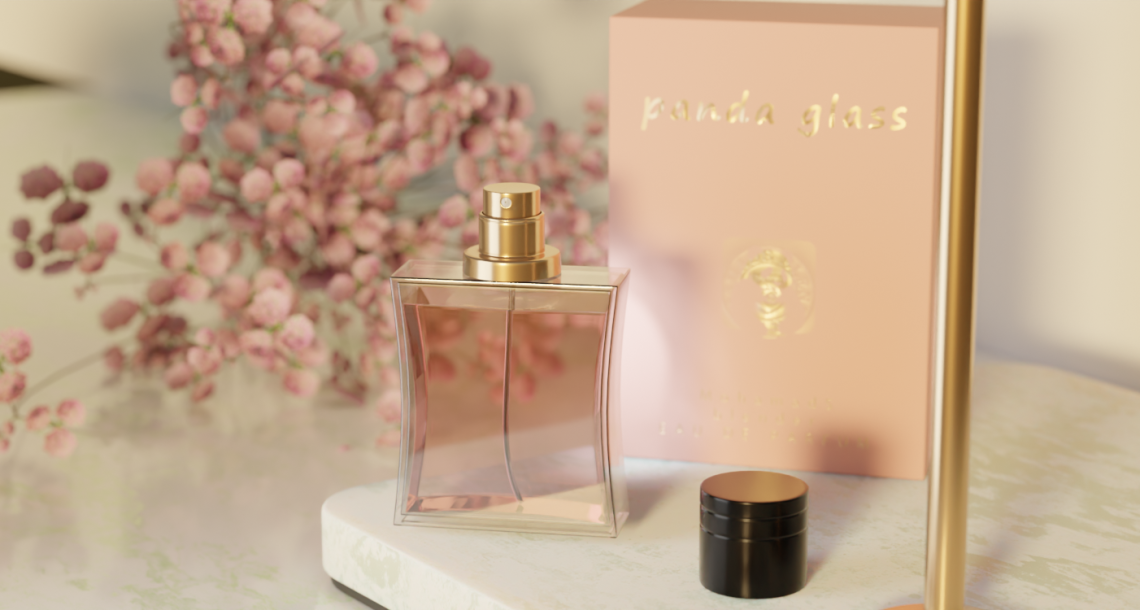
Gold electroplating remains the most classic choice for prestige fragrance lines, signaling heritage, warmth, and luxury. Within “gold,” suppliers can typically offer variations such as:
– **Bright/polished gold** — high-shine, mirror-like reflection
– **Matte or brushed gold** — softer, more modern aesthetic
– **Antique/aged gold** — used for heritage or vintage-positioned brands
Gold finishes pair well with amber, clear, or deep-colored glass bodies and are commonly matched with gold-toned pumps, collars, and overcaps for a cohesive packaging system.
## Silver Finishes
Silver electroplating offers a cooler, more contemporary tone and is often chosen for unisex, fresh, or minimalist fragrance positioning. Common variations include:
– **Bright silver/chrome** — sharp, modern, high reflectivity
– **Brushed/satin silver** — subtler, fingerprint-resistant appearance, popular for everyday-use packaging
– **Gunmetal/dark silver** — used for masculine or “techy” fragrance branding
Silver finishes are especially popular on clear or frosted glass bottles, where the contrast between transparent glass and metallic accents creates visual depth.
## Rose Gold Finishes
Rose gold has become one of the fastest-growing finish requests over the past several years, particularly for feminine and gender-neutral fragrance lines. It sits between gold and silver/copper tones, and small variations in the ratio of copper to gold in the plating solution can shift the final color noticeably — from a warm pink-gold to a more coppery bronze.
Because rose gold is more sensitive to formulation ratios than standard gold or silver, **color consistency across production batches is one of the most common pain points** buyers report.
## Common Buyer Pain Points with Electroplated Custom Glass Bottles
1. **Batch-to-batch color inconsistency** — especially for rose gold, where slight changes in plating bath composition can cause visible shade differences between production runs.
2. **Peeling or fading after contact with alcohol-based fragrances** — since most fine fragrances are alcohol-based, the plated layer (and its protective top coat) must be chemically resistant to repeated contact and spillage.
3. **Mismatch between bottle finish and pump/cap finish** — when bottles and components are electroplated by different vendors or in different batches, “gold” on the bottle and “gold” on the pump collar may not visually match.
4. **Scratches and wear from packing/transport** — electroplated surfaces, especially bright/polished finishes, can show fine scratches if protective film or interleaving isn’t used during packing.
## How These Issues Are Addressed in Production
– **Color matching standards:** Using Pantone or RAL reference standards (agreed upon at the sample approval stage) for gold, silver, and rose gold tones helps ensure each production batch is checked against a fixed reference rather than “by eye.”
– **Adhesion and chemical resistance testing:** Cross-hatch adhesion tests and alcohol-wipe/immersion resistance tests on sample batches before mass production helps identify peeling risks early.
– **Coordinated finishing across components:** Because we produce glass bottles, pumps, and caps within the same packaging program, gold/silver/rose gold finishes can be applied and color-matched across all components together, rather than sourced separately and matched after the fact.
– **Protective packing:** Individual poly bags, foam interleaving, or paper dividers for electroplated bottles reduce surface scratching during domestic transport and export shipping.
## Specifying Electroplated Finishes in Your Quotation Request
When requesting a quote for custom glass bottles with electroplated finishes, include:
– The specific finish name and, if possible, a Pantone/RAL reference or physical sample for color matching
– Which surfaces require plating (full body, partial, embossed areas only)
– Whether the finish should be bright, matte, brushed, or antique
– Confirmation that pumps/caps/overcaps should be color-matched to the bottle finish
## Frequently Asked Questions
**Q: Is electroplated glass safe for use with alcohol-based perfumes?**
Yes, when properly applied with a chemical-resistant top coat. This is why adhesion and alcohol-resistance testing during sample approval is important before mass production.
**Q: Why does rose gold sometimes look different between production batches?**
Rose gold’s tone depends on the copper-to-gold ratio in the plating process, which is more sensitive to small process variations than standard gold or silver. Using a fixed Pantone/RAL reference helps minimize this variation.
**Q: Can the bottle, pump, and cap all be electroplated to match exactly?**
Yes — this is best achieved when all components are finished within the same production program and checked against the same color reference standard.
**Q: How can I tell if an electroplated finish will hold up during shipping?**
Ask your supplier about their packing method for plated bottles (e.g., individual protective bags, foam dividers) and request photos of how electroplated SKUs are packed for export.
—
*We offer in-house electroplating for gold, silver, and rose gold finishes across bottles, pumps, and caps, with Pantone-based color matching and adhesion/chemical resistance testing built into our sample approval process.*
Sustainability
Designing for End of Life: How Panda Glass Helps Fragrance Brands Build Circular Packaging Programs
The fragrance industry has a waste problem that its packaging does not advertise. Billions of perfume bottles are produced annually.