
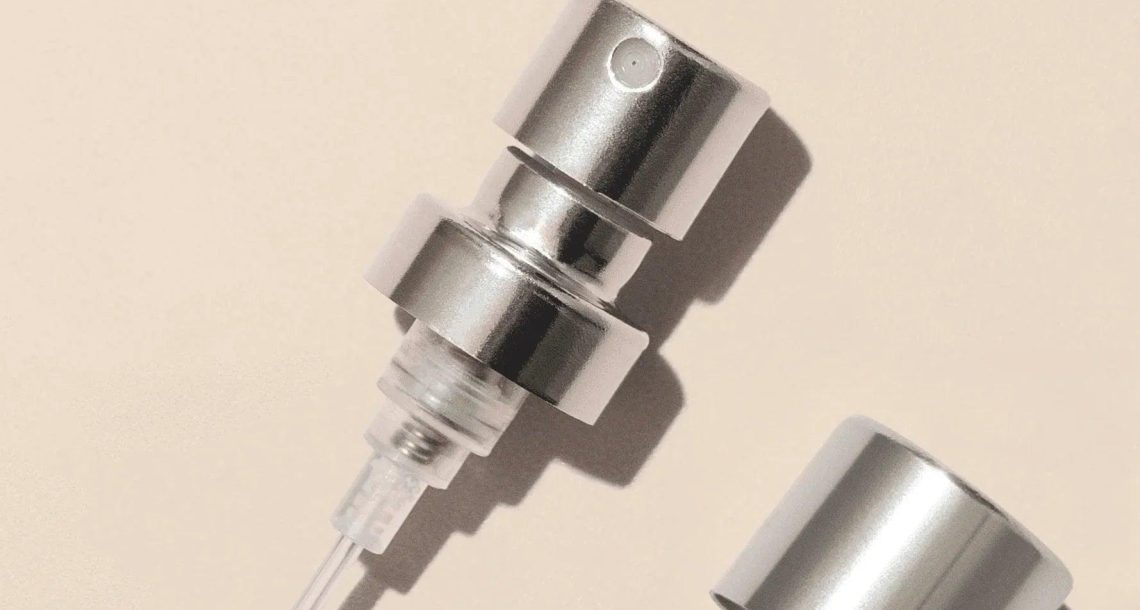
A perfume spray pump is a small mechanical system with a disproportionate influence on the finished fragrance experience. A pump that produces an attractive mist during a brief demonstration may still show inconsistent dosing, poor priming, formula incompatibility or leakage in distribution.
For large-volume purchasing, validation should cover dose repeatability, spray quality, bottle compatibility, chemical exposure and production-line behavior—not only sample appearance.
1. Understand the Pump as a Functional Assembly
A typical mechanical perfume pump may contain an actuator, nozzle or swirl insert, piston, spring, valve elements, gasket, housing and dip tube. The precise design varies by product.
When the actuator is pressed, liquid is metered and passed through an internal flow path. Spray performance is affected by pump design, nozzle geometry, fluid properties and actuation conditions. A test with water may not reproduce behavior with the actual fragrance.
Buyers should use the intended liquid—or an appropriately justified representative formula—when validating critical performance.
2. Define Spray Output and Variation
Output per actuation can be expressed by volume or mass. Different outputs provide different application experiences, so the best nominal dose depends on the fragrance and intended spray characteristics.
Specify the target dose, test-liquid conditions, actuation method and acceptable variation. Measure both variation between units and variation within each pump across repeated strokes.
The evaluation should include priming strokes, fully developed spray, partial-stroke behavior if relevant and performance after repeated use. An example nominal output such as 0.10 ml should not be mistaken for a universal industry requirement.
3. Evaluate the Mist Objectively
“Fine mist” is a marketing description unless a measurement method accompanies it. Important characteristics include droplet-size distribution, spray angle, uniformity, visible jetting, dripping after actuation and repeatability.
Where needed, use controlled spray-pattern imaging or instrument-based droplet evaluation. Record actuation speed, liquid composition, temperature and measurement distance so results can be compared reliably between suppliers.
Spray quality with water does not necessarily predict spray quality with ethanol-based fragrance formulas. Validate the finished system under representative conditions.
4. Crimp-On and Snap-On Systems Need Different Validation
Crimp-on pumps use a compatible ferrule or collar mechanically formed around the bottle finish. Seal performance depends on the glass neck, gasket, ferrule and crimping equipment. Snap-on systems use retention geometry designed to engage with a matching neck profile.
Neither option is automatically better. The correct choice depends on the bottle neck, available filling equipment, assembly requirements and validated sealing performance.
For crimp systems, verify the crimp profile and installation process. For snap-on systems, verify engagement, retention and assembly force. Do not treat nominal neck size alone as proof of compatibility.
5. Leakage Is a Product-System Risk
Leakage may originate at the bottle-to-pump interface, internal valve or nozzle. Export distribution adds handling, vibration and changing temperatures. Because fragrance products may contain volatile and flammable ingredients, testing requires safe procedures and appropriate sample conditions.
A meaningful program may include static upright, horizontal or inverted storage where relevant; defined temperature exposure; suitable pressure testing; vibration or transportation simulation; and inspection for visible leakage or mass loss.
There is no single test that validates all fragrances and packages. Select acceptance criteria for the actual formulation, assembly and shipping environment.
6. Chemical Compatibility of Wetted Components
Pump gaskets, springs and plastic elements can be affected by contact with perfume ingredients. Potential problems include swelling, hardening, corrosion, stress cracking or changes in function.
Ask for information on wetted materials. For new formulations, conduct exposure studies followed by checks of spray dose, actuation force, appearance and sealing. A compatibility statement for one formula is not proof of suitability for another.
7. Production-Line Compatibility and Dip Tubes
Large orders are assembled on real equipment, not at a showroom table. Confirm component feeding behavior, installation force, crimp or snap-on tooling, completed neck dimensions, equipment speed and rejection procedures.
Dip tube geometry should match the bottle’s internal shape. Excess length may cause bending or interference; too little length can leave avoidable residual product in the bottle. Verify tube length using the actual bottle and its intended fill conditions.
8. Pre-Production Performance Matrix
A production-representative approval plan should specify test method and acceptance criteria for output dose, spray pattern, priming, actuation force, leakage, formula compatibility, durability and assembly fit. Samples should reflect the intended manufacturing process.
For repeat orders, request traceability and a documented approach to material, tooling and process changes. These changes may affect performance even if the components look identical.
9. The Cost of Pump Failure Exceeds Component Price
Pump purchasing cost should be considered with assembly rejects, line interruptions, formula testing, complaint handling and potential finished-product losses. A cheaper pump that causes slow installation or frequent leaks can be significantly more expensive at the finished-goods level.
A pilot run using actual bottles, pumps and filling-line settings can identify problems before a much larger order is committed.
Frequently Asked Questions
What is a good spray output for a perfume pump?
It depends on the fragrance, nozzle design, target sensory experience and intended use. Define a target output and tolerance, then verify it under controlled conditions.
How can I reduce leakage in bulk perfume production?
Match the bottle finish and pump sealing geometry, control installation, confirm material compatibility and test complete filled assemblies under realistic distribution conditions.
Are crimp-on and snap-on perfume pumps interchangeable?
No. These designs use different retention and neck features and require compatibility validation.
How should I test perfume pumps before a large order?
Use representative samples to test dose, mist quality, priming, leakage, actuation, endurance, chemical compatibility and actual production assembly.
Can perfume pumps be customized?
Depending on product design and tooling, options can include actuator style, finish, color, selected performance characteristics and dip tube configuration. Verify feasibility with the manufacturer.
Conclusion
The most suitable perfume pump is one that delivers consistent spray quality and forms a robust system with the selected glass bottle, fragrance formula and filling process. Technical approval before mass production reduces risk throughout the supply chain.
CTA: Need perfume spray pumps for a bulk packaging project? Send PandaGlass your bottle neck specifications, spray requirements, fragrance type and estimated quantity to discuss compatible pump configurations.