The sustainability conversation in fragrance packaging has, for the past several years, been dominated by a question that was never quite the right one: how do we make packaging more sustainable by making it less? Less material, less weight, less glass, less everything — as though the path to environmental responsibility ran through reduction alone.
That conversation is shifting. And the shift is bringing fragrance packaging back to a material that has always been, by almost every measure that matters, the most genuinely sustainable option available: glass.
The Case for Glass
Glass is inert. It does not leach chemicals into the fragrance it contains, does not degrade under UV exposure, and does not interact with the alcohol-based formulations that comprise the majority of fine fragrances. These properties are not incidental — they are why glass became the dominant material for perfume bottles in the first place, and why no alternative material has successfully displaced it in the prestige fragrance segment.
Glass is also indefinitely recyclable. Unlike plastic, which degrades in quality with each recycling cycle and eventually becomes unrecyclable, glass can be melted and reformed into new glass of equivalent quality without limit. A glass perfume bottle that reaches the end of its life as a fragrance vessel can become new glass — new bottles, new jars, new flat glass — without material degradation.
And glass is refillable. The refillable fragrance model — in which a consumer returns to a brand counter or retailer to have their bottle refilled rather than purchasing a new one — is growing rapidly across the prestige fragrance market, driven by both consumer demand and retailer sustainability commitments. Glass is the only primary packaging material that supports genuine refillability at fragrance quality standards: it does not absorb fragrance residue, does not retain color from previous fills, and does not degrade mechanically through repeated handling.
Recycled Glass Content: The Next Frontier
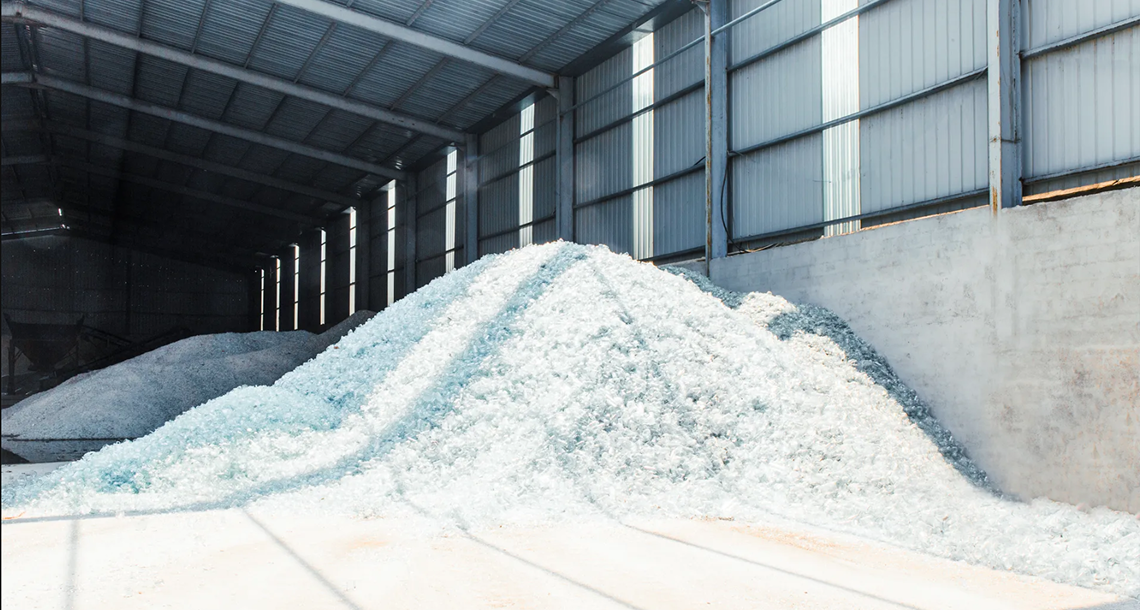
The integration of post-consumer recycled (PCR) glass content into fragrance bottle production is an area of active development across the glass manufacturing industry. Recycled glass — known as cullet — reduces the energy required to produce new glass, lowers carbon emissions from the melting process, and reduces the volume of glass entering landfill or lower-value recycling streams.
At Panda Glass, we are actively developing our capabilities in recycled glass content integration, working with our raw material suppliers to increase cullet percentages in our production batches while maintaining the optical clarity and dimensional consistency that premium fragrance packaging demands. This is technically demanding work — high recycled content can introduce color variation and inclusion risks that are unacceptable in crystal-clear flint glass — but it is work we are committed to advancing.
Packaging Weight and Logistics Sustainability
Glass weight is frequently cited as a sustainability liability — heavier packaging means more fuel consumed in transport, more carbon emitted per unit delivered. This is a real consideration, and one that responsible glass manufacturers take seriously.
At Panda Glass, we engineer our bottle weights to deliver the premium hand-feel and structural integrity that fragrance brands require, without unnecessary excess. Light-weighting initiatives — reducing glass mass while maintaining wall strength and visual quality — are an ongoing part of our product development program. We also support brands in optimizing their secondary packaging configurations for shipping efficiency, reducing per-unit transport emissions across the full supply chain.
The Honest Sustainability Conversation
No packaging material is without environmental impact. Glass requires significant energy to produce. It is heavier than alternatives. Its transport footprint per unit is higher than lightweight plastics.
But glass is also honest. It does not pretend to be sustainable through greenwashing. It delivers on its sustainability claims — recyclability, refillability, inertness, longevity — in ways that are verifiable, measurable, and meaningful. For fragrance brands building a genuine sustainability commitment rather than a marketing narrative, glass is not the compromise choice. It is the right one.